
Materials
A QR code in a performance: one gesture per act, not a phone in hand for the whole show
When someone in the audience picks up a phone, the performance pauses for a moment. The question is not how to make a show interactive, but how to interrupt it once — and not break what took months to build.
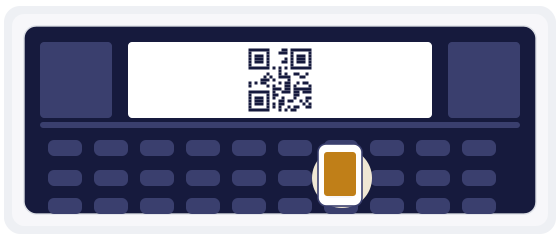
A phone in the hall is already an interruption
A lit screen is visible from the back row. Whoever is looking at it drops out of the action, and that is obvious to more than just them.
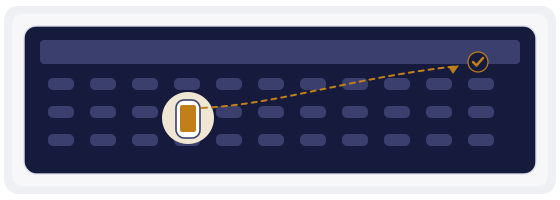
So the question is not "how much interactivity can we add" but "how much can we add without destroying attention".
Most of the time the right answer is very little. One moment per act, clearly marked, after which the audience puts the phone away and comes back to the stage.
Three ways to involve an audience
They are not the same thing, and it is worth not confusing them.
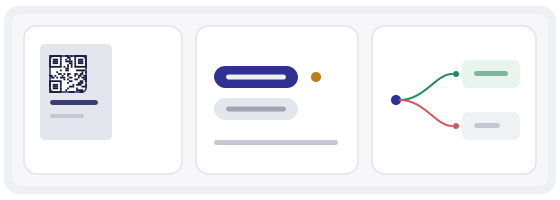
The third is almost always safe. The first is the reason for doing any of this — and it is the one that breaks most often.
The one-gesture rule
Interactivity in a performance is not a feature, it is a line. It has a place, a time and a reason.
- The moment must be written into the action, not bolted on beside it.
- The audience must understand what to do without a spoken explanation.
- The screen gets one question and two or three answers — no more.
- After answering, the person must see straight away that they were heard.
- Then silence and the stage. No "and now go over here too".
The test: if the moment could be removed without harming the show, it probably should be.
What actually breaks in the hall
Not the technology. The things nobody thought about in rehearsal.
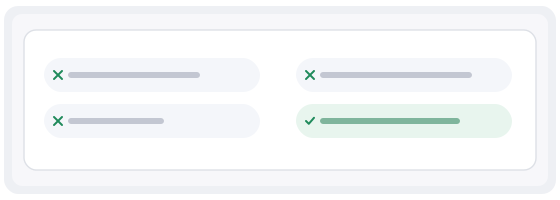
- The venue Wi-Fi cannot hold a hundred people at once.
- In the dark, a code on a programme does not read.
- Some of the audience has no phone, or a dead battery.
- The stage does not wait: the actors move on while the vote is still running.
- The programmes were printed long ago and point to an old page.
Every one of these is solved in advance and almost for free. But only in advance — during the show there is no time left.
On the network specifically: ask people to scan at one particular moment, not "sometime during the evening". A hundred phones at once is real load, and it needs testing at a run-through.
A vote that actually decides something
The worst thing that can happen is an audience voting and then seeing that the result changed nothing.
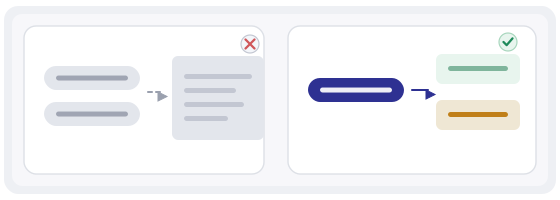
A vote for show
The audience chooses, the actors perform exactly what they did yesterday. It works once; the second time nobody believes it.
A vote the stage depends on
The branch really changes: a different ending, a different character, a different song. The cast has to know both versions cold.
If the second is impossible, do not call it a vote at all. Call it "the ending we have chosen today" — and do not ask the hall about something already decided.
The people who will not scan
Part of the audience will never scan. Some have no phone, some do not want to, some simply did not see the code.
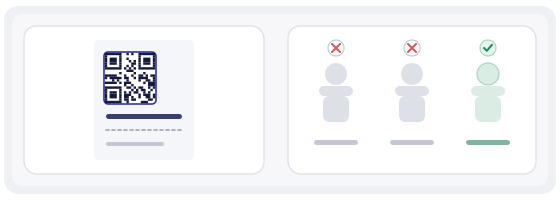
That is not a problem to solve. It is a condition to accept: the performance has to be complete for those who took no part.
So show the result in a way everyone understands — including the people who did not vote. Otherwise half the hall feels they missed something important and are to blame for it.
Light, silence and darkness
A code on a programme under a dim lamp does not read. This is physics, not taste: in the dark the camera needs more contrast and more time.
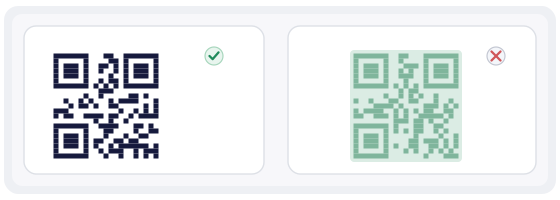
So: a large code, black on white, with no fine patterns around it. And preferably not somewhere on the programme that a hand will cover.
One more small thing: ask people to dim their screens. A few words before the start and the hall looks entirely different.
Six mistakes that ruin the evening
- Interactivity at the moment the audience should be listening to a monologue.
- A vote whose result changes nothing.
- A code in a dark hall, never tested on the real programme.
- An old page behind a code printed last year.
- A stage that waits for results and loses its rhythm.
- Asking people to "keep your phones ready for the whole show".
Three weeks before opening night
The most reliable way to ruin interactivity is to remember it the day before. So spread the preparation over a few steps.
Three weeks out. Agree on the moment and write it into the script. Not "somewhere in act two" but a specific line, after which the audience reaches for a phone.
Two weeks out. Print a test programme and check the code in the hall, from the seat an audience member will actually use. It is the cheapest test and the most useful one.
One week out. Run the vote with the whole company: someone has to play both branches and confirm that the switch does not look like a pause.
On the day. Check that the page opens, that the code has not expired and that it does not point at an old version. Five minutes that save the evening.
Try it at a single performance
Do not make the whole show interactive. Take one performance and one moment.
In the generator, create a code for that moment's page. Build it so it can change between performances: one question today, another tomorrow, and once the run ends, simply a thank-you.
In QR Studio, make two layouts: one for the programme and one for the set. They are different objects — a programme in the hand, a set seen from several metres away.
Then walk the audience's path in the dark with the scanner. If the code will not scan from a seat, better to learn that at a run-through than on opening night.